

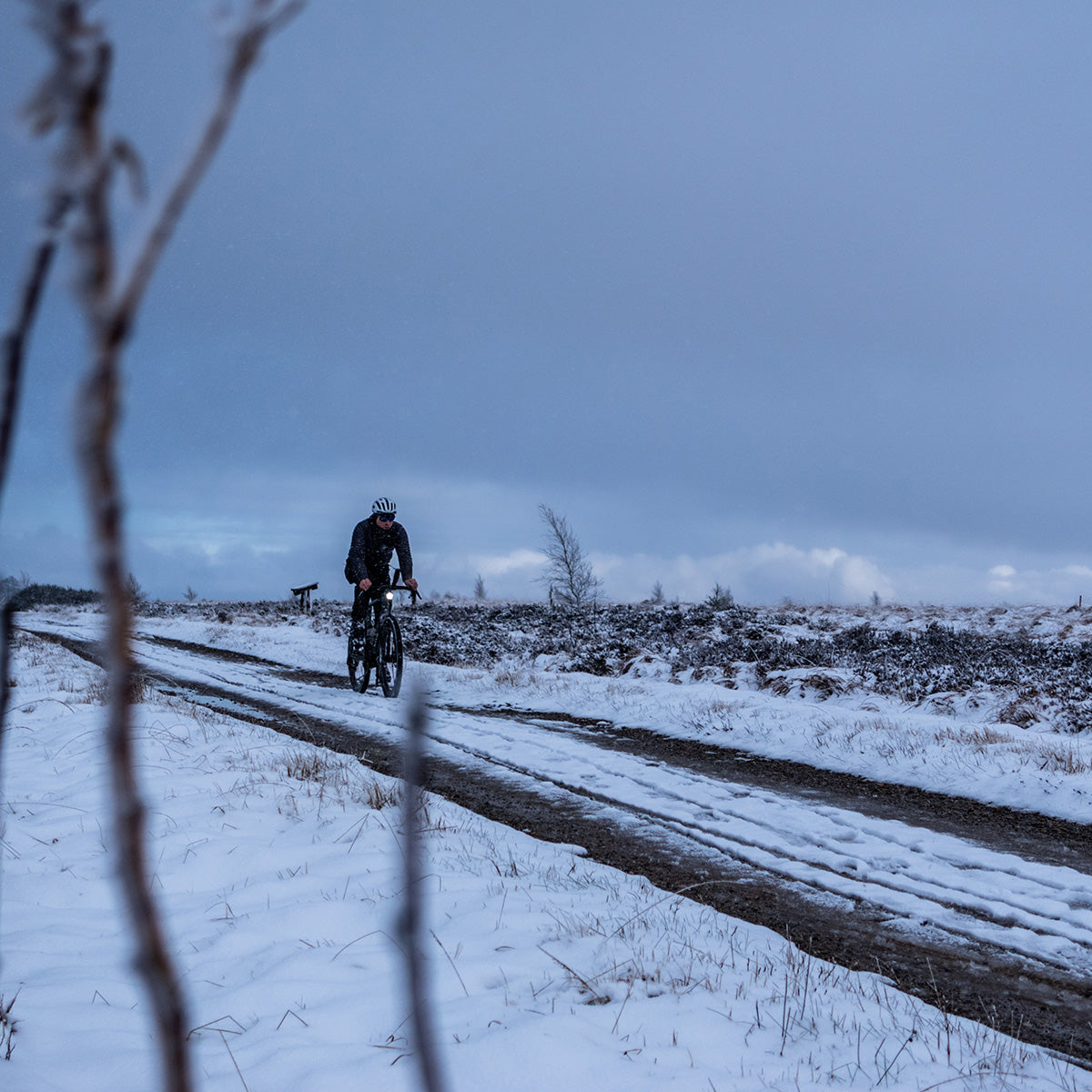
Cold feet ruin rides. Not in a subtle, background-discomfort way, but in a way that takes over your focus, shortens your effort, and makes you dread getting back on the bike when the temperature drops. If you've ever cut a winter ride short because your toes stopped feeling like toes, you already understand what a proper pair of winter cycling shoes is supposed to solve.
This guide covers everything you need to choose the right cold weather cycling shoe for your riding: what separates a genuine winter shoe from a shoe cover layered over a summer shoe, what construction details actually matter, and a detailed look at the Lake winter range for 2026. If you want to keep riding through the cold months without compromising comfort, fit, or power transfer, read on.
Winter Shoes vs Shoe Covers: When to Use Each
Shoe covers get a lot of use in transitional weather, and they earn it. A good neoprene or thermal cover over your regular shoes can buy you a useful range of additional warmth and wind protection without the cost or bulk of a dedicated winter shoe. If your winters are mild, or if you only ride in cold conditions a few times per season, a shoe cover may be all you need. The trade-offs become apparent quickly, though.
Shoe covers add bulk over an already-closed shoe, which means they rarely seal properly around the sole, ankle, or closure system. Water and wind find the gaps. After extended exposure they saturate and lose their effectiveness. They're also not built for extreme temperatures: on a ride below roughly 5°C (40°F), a shoe cover and a standard shoe will not keep your feet warm through a full effort.
A purpose-built winter cycling shoe is a different tool entirely. The insulation, water resistance, seam construction, and upper materials are integrated from the ground up. The sole is designed for cold-weather grip and stiffness. The ankle height is built to keep the entry point sealed. The closure system is designed to work with gloved hands. The result is a shoe that performs in conditions a cover simply cannot handle, and that does so consistently over the course of a full season.
|
Shoe cover |
Dedicated winter shoe |
|
|
Temperature |
8°C–14°C (46°F–57°F) |
Below 8°C (46°F) |
|
Ride duration |
Under two hours |
Long rides |
|
Conditions |
Light rain, variable weather |
Sustained rain, reliable water resistance needed |
|
Fit |
Layered over existing shoe |
Purpose-built fit, no layering compromises |
What to Look For in a Winter Cycling Shoe
Insulation Type
Not all insulation behaves the same way in a cycling application. Bulk, moisture retention, and how insulation performs when wet are all worth understanding before you buy.
Thinsulate (used in several Lake models) is a synthetic microfiber insulation that maintains warmth even when damp. It's thin relative to its thermal performance, which matters in a cycling shoe where internal volume is precise and fit is load-bearing. 200g Thinsulate, used in the MX146 and CX146, is a meaningful amount of insulation for most winter riding conditions.
Outlast (used in the MXZ305) is a phase-change material. Rather than just trapping heat, it absorbs, stores, and releases thermal energy in response to your skin temperature, which helps stabilize the thermal environment inside the shoe across a wide range of effort levels and ambient temperatures. The right insulation depends on the conditions you ride in. For extreme cold, phase-change materials or higher-density insulation are worth the added cost. For moderate winter conditions, 200g Thinsulate is practical and effective.
Water Resistance vs. Waterproofing
These terms describe meaningfully different construction approaches, and conflating them leads to disappointment.
A water-resistant shoe uses DWR (durable water repellent) coating on the outer material, often combined with a treated microfiber or softshell upper, to cause water to bead and run off the surface. Under sustained or heavy rain, water will eventually penetrate. Water-resistant shoes work well in light to moderate rain, mist, and splash, and they breathe better than fully sealed waterproof constructions.
A waterproof shoe, in the truest sense, uses a seam-taped internal membrane (similar to the approach used in quality hiking boots) to prevent water ingress even under sustained exposure. The trade-off is reduced breathability and typically more weight. Most winter cycling shoes, including three of the four Lake models covered here, are highly water-resistant rather than fully waterproof. For the riding conditions most cyclists encounter, this is a practical choice: better breathability, adequate protection in real-world conditions. If you ride in sustained rain regularly, look for models with seam-taped membrane construction.
DWR coating note: DWR is not a permanent treatment. It degrades with washing, UV exposure, and wear. All water-resistant Lake winter shoes require DWR reapplication once or twice per year to maintain their rated performance. We cover this in the care section below.
Sole Type
Winter riding presents two specific demands on the sole that don't apply in summer: traction on wet or slippery surfaces, and stiffness retention in cold temperatures. Some sole materials stiffen excessively in cold conditions, reducing power transfer and creating discomfort.
Look for soles with meaningful traction patterns (especially if you ride on gravel, trails, or mixed surfaces where you may need to put a foot down), and check whether the sole material is rated for cold-weather use.
Closure System
Your closure system needs to be operable with gloves on. BOA M4 dials are specifically designed for this: the large-diameter dial surface gives you enough purchase to adjust on the move even in thick winter gloves. Speed-laces offer quick full-foot adjustment and are easily replaceable if they wear out.
Ankle Height
A taller ankle collar does two things: it seals the entry point of the shoe against wind and water, and it provides additional warmth at the ankle where circulation is limited. For extreme-cold riding, a shoe with a higher ankle collar makes a real difference. For moderate winter conditions, a standard ankle height combined with a good base layer is usually adequate.
Cleat Compatibility
Check your cleat system before you buy. The Lake winter range includes shoes designed for 2-bolt SPD (mountain bike cleats), 3-bolt road cleats, and models compatible with both. The CX146 is road-only. The MXZ305 is SPD-only. The MXZ21 and MX146 work with both systems. Match the shoe to your pedals.
The Lake Winter Range
Lake has built winter cycling shoes since the 1980s. The current range covers four distinct models across a price ladder, from highly capable sport-use shoes to the most extreme cold-weather construction available. All models are available in the Lake winter collection.
For riders who need a wide fit, three of the four models below come in Regular and Wide. You can browse the full wide cycling shoe collection or use the Find My Fit tool to identify the right last for your foot shape.
MXZ305 Winter Extreme
- Advanced Protection: Constructed from durable, water-resistant American full-grain leather paired with a Helcor toe protector for serious wind, moisture, and abrasion resistance.
-
Smart Insulation: Features 200g Thinsulate for sustained warmth and an Outlast lining that regulates temperature during shifting effort levels.
-
Rugged Sole & Compatibility: Built with a durable Ultra Bomb-Proof Enduro outsole and fiberglass-injected nylon midsole, compatible exclusively with 2-bolt SPD cleats (MTB/gravel).
-
Glove-Friendly Closure: Equipped with a BOA M4 closure dial that is easily operable even while wearing winter gloves.
- Extra Roomy Fit: Utilizes the Winter Extreme Last, offering Lake's largest and tallest toe box to accommodate thick socks, toe warmers, and cold-induced swelling.
MXZ21 Winter
- Performance Fit: Uses the Competition Last, featuring a tighter heel for a race-like fit combined with a larger toe box suitable for winter riding.
-
Water-Resistant Layers: Features a soft-shell outer with water-resistant microfiber, a DWR coating, and a seam-taped membrane to handle sustained rain and road spray.
-
Stiff Sole & Grip: Equipped with a 100% carbon fiber midsole for efficient power transfer and a Mountain Competition real rubber outsole for secure grip in wet conditions.
-
Dual Cleat Compatibility: Functions as a versatile crossover shoe by supporting both 2-bolt SPD and 3-bolt road pedal systems.
- Adjustable & Inclusive Fit: Offers a speed-lace closure system for quick adjustments and is available in both Regular and Wide fits.
MX146 Winter MTB/Gravel
- Specialized Winter Traction: Features a Supergrip Enduro outsole with ICE LOCK tread inserts, providing specific grip on icy and compressed snow surfaces.
-
Dual Cleat Versatility: Compatible with both 2-bolt SPD and 3-bolt road cleats, making it a versatile crossover shoe for different bikes and disciplines.
-
Weather Resistance & Insulation: Constructed with a water-resistant microfiber softshell upper, a DWR coating, and 200g Thinsulate insulation to handle wet and cold conditions.
-
Glove-Friendly Closure: Equipped with a BOA M4 dial that allows for easy adjustments while wearing winter gloves.
- Comfortable Fit Options: Built on the Sport Last to offer room for winter socks without excess volume, and available in both Regular and Wide fits.
CX146 Winter Road
- Road-Specific Design: Built specifically for road cycling, featuring a Road Sport fiberglass-injected nylon outsole optimized for road riding efficiency.
-
3-Bolt Compatibility Only: Compatible exclusively with 3-bolt road cleats; it does not support 2-bolt SPD systems.
-
Weather Resistance & Insulation: Shares the MX146's highly water-resistant microfiber softshell upper, DWR coating, and 200g Thinsulate insulation for reliable winter warmth.
-
Glove-Friendly Closure: Equipped with the same BOA M4 dial for quick, hassle-free adjustments while wearing winter gloves.
- Accommodating Fit: Built on the Sport Last to fit a wide range of foot shapes with room for thick winter socks, and available in both Regular and Wide sizes.
Winter Sizing: Why You Must Size Up
Every Lake winter shoe requires sizing up from your standard summer shoe. The reason is straightforward: winter socks are thicker, and your foot may expand slightly in cold conditions. A shoe that fits precisely on a thin summer sock will be uncomfortably tight on a wool winter sock, which will restrict circulation and make cold feet worse.
The general rule for all Lake winter models: size up 1 to 1.5 sizes from your regular summer cycling shoe size. This applies regardless of which model you're buying. If you normally wear a 43 in your summer shoe, try a 44 or 44.5 in your winter shoe. If you're between sizes, go up rather than down.
Sock layering considerations:
The thicker your sock, the more internal volume you need. A mid-weight merino wool cycling sock (the most common choice for winter riding) typically adds approximately half a size of volume compared to a thin lycra summer sock. A heavyweight or double-layer sock adds more. Toe warmers, used inside the shoe, add further volume.
When choosing your winter shoe size, think about the thickest sock combination you're likely to wear and size accordingly. It is much better to have a touch of extra room than to compress a thick sock against a tight upper.
For a precise fit recommendation that accounts for your foot measurements and intended sock thickness, use the size guide and Find My Fit tool.
Caring for Your Winter Cycling Shoes
Winter shoes take harder use than summer shoes: more mud, more water, more road grime, more temperature cycling. A few straightforward maintenance habits will extend the life of any model significantly.
Drying After Rides
Never dry cycling shoes near a direct heat source. High heat, whether from a radiator, forced air heater, or clothes dryer, degrades adhesives, warps soles, and damages upper materials, including leather. Loosen the closure system fully, remove the insoles if possible, and allow the shoes to dry at room temperature with good airflow. Stuffing them loosely with newspaper accelerates drying and helps the shoe retain its shape.
Cleaning
Remove mud and debris after every ride in wet or dirty conditions. Use a damp cloth or soft brush for microfiber uppers. For leather models like the MXZ305, a leather-specific cleaner preserves the material and maintains the protective finish. Avoid abrasive brushes on any upper material.
DWR Reapplication
This is the single most important maintenance step for water-resistant winter shoes, and the one most riders skip. DWR coating degrades over time through washing, UV exposure, and abrasion. When you notice water no longer beading off the surface of your shoe and instead soaking in, the DWR needs refreshing.
Reapply DWR treatment once or twice per year, or more frequently if you wash the shoes or ride heavily in wet conditions. DWR spray products are widely available at outdoor and cycling retailers. Apply to a clean, dry shoe, allow to cure as directed, and optionally heat-activate with a warm (not hot) hairdryer to bond the treatment to the fabric.
All water-resistant Lake winter shoes require periodic DWR reapplication to maintain their rated performance. The MXZ305 leather construction is not a DWR-reliant shoe in the same way as the microfiber models, but it still carries a DWR coating that benefits from occasional refreshing.
End-of-Season Storage
At the end of winter, clean the shoes thoroughly, allow them to dry completely, reapply DWR, and store in a cool dry place away from direct sunlight. Do not store in a compressed state or under weight, as this can deform the toe box over time. For leather models, a light application of leather conditioner before storage will prevent drying and cracking.
BOA dials should be checked periodically. The lace cord is replaceable if it shows wear or fraying, and BOA offers a lifetime guarantee on their dial systems.
Frequently Asked Questions
What temperature range are winter cycling shoes designed for?
This varies by model. The MXZ305 is the most extreme cold-weather shoe in the Lake range. The other models in the range (MXZ21, MX146, CX146) are well-suited to moderate winter conditions, depending on your personal cold tolerance and the socks you use. No winter cycling shoe replaces good layering and appropriate sock weight.
Are winter cycling shoes waterproof?
No, the shoes are highly water-resistant: they handle rain, road spray, and light to moderate wet conditions well, but they are not fully waterproof and will eventually allow water ingress under sustained heavy rain.
Do I need to size up for winter cycling shoes?
Yes, always. Size up 1 to 1.5 sizes from your regular summer cycling shoe to accommodate thicker winter socks. If you wear particularly heavy socks or plan to use toe warmers inside the shoe, err toward 1.5 sizes up. Refer to the size guide and use the Find My Fit tool for a precise recommendation.
Which Lake winter shoes come in wide fit?
The MXZ21, MX146, and CX146 are all available in Regular and Wide. The MXZ305 is available in Regular sizing only. If you need a wide fit and want detailed guidance on which last suits your foot shape, the best cycling shoes for wide feet guide and the wide cycling shoe collection are good starting points.
Can I use winter MTB shoes with road pedals?
Yes, if the shoe is compatible with your cleat type. The MXZ21 and MX146 are compatible with both 2-bolt SPD and 3-bolt road cleats, so they work across pedal systems. The MXZ305 is SPD (2-bolt) only. The CX146 is 3-bolt road cleat only. Check your pedal system against the cleat compatibility before purchasing.
How do I know when to reapply DWR to my winter shoes?
The simplest test: sprinkle a few drops of water onto the upper of the shoe. If the water beads and rolls off, DWR is still active. If the water soaks into the material and darkens it (a process called "wetting out"), DWR needs reapplication. For most riders in regular use, this happens once or twice per year.
How should I dry my winter cycling shoes after a wet ride?
Loosen the closures fully, remove insoles if possible, and dry at room temperature with good airflow. Do not use direct heat sources such as radiators or heated air, as these damage adhesives and upper materials. Loosely stuffed newspaper accelerates drying and helps maintain the shoe's shape. Allow several hours, or overnight, for thorough drying before the next use.
Cycling Doesn’t End When Summer Does