

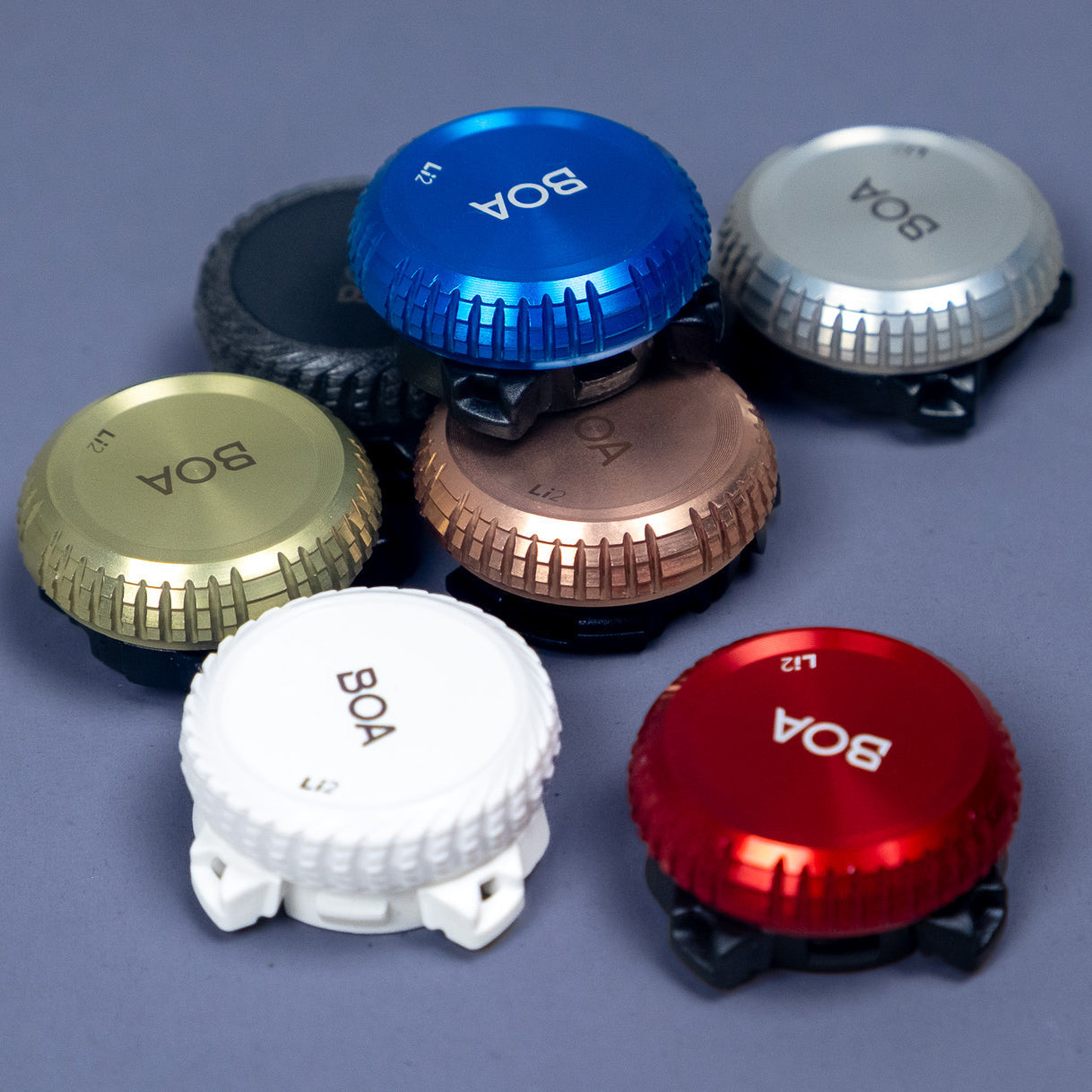
Das Verschlusssystem eines Fahrradschuhs ist kein Ausstattungsdetail. Es bestimmt, wie präzise du die Passform einstellen kannst, wie leicht du während der Fahrt nachjustierst, wie der Schuh performt und wie lange das gesamte System hält. Bei jedem Klick ins Pedal arbeitet der Verschluss mit. Es lohnt sich also zu verstehen, welche Optionen es wirklich gibt, bevor du dich entscheidest.
Bei Lake Cycling umfasst das Sortiment verschiedene Verschlusskonzepte:
-
BOA Li2 Systeme mit zwei Drehverschlüssen für Präzision auf Race-Niveau
-
BOA L6 Systeme mit einem Drehverschluss für Performance in der Mittelklasse
-
BOA M4 Drehverschlüsse, entwickelt für den Winter und die Bedienung mit Handschuhen
-
Klassische Schnürsenkel für Fahrer, die maximal gleichmäßigen Druck bevorzugen
-
Speed-Lace-Systeme mit Klettriemen, speziell für den Triathlon gebaut
Jedes System folgt einer eigenen technischen Logik und passt zu einem bestimmten Fahrertyp am besten.
In diesem Guide erfährst du, wie jedes System funktioniert, wo es seine Stärken hat, welche Lake Modelle es nutzen und wie du entscheidest, welches an deinen Fuß gehört.
BOA Li2 Drehverschlüsse: Mikro-Justierung an der Spitze des Sortiments
Der BOA Li2 ist der Spitzen-Drehverschluss im BOA System. Er nutzt einen Edelstahldraht, der durch einen Mechanismus mit zwei Drehknöpfen läuft, sodass du die Spannung in zwei Zonen des Obermaterials unabhängig voneinander fein einstellen kannst, typischerweise am Vorfuß und am Mittelfuß. Du drehst den Knopf im Uhrzeigersinn, um in Mikro-Schritten nachzuspannen, und du löst die Spannung sofort, indem du den Knopf mit einer einzigen Bewegung herausziehst.
Was den Li2 fürs Radfahren so wertvoll macht, ist die Mikro-Justierung in beide Richtungen. Du kannst während der Fahrt eine Vierteldrehung Spannung hinzufügen, ohne anzuhalten oder auszuklicken. Schwillt dein Fuß auf einer langen Sommerausfahrt leicht an, gibst du etwas Spannung frei, ohne den Schuh mehr als einmal anzufassen. Für Straßenrennen oder leistungsorientiertes Fahren, wo der Unterschied zwischen sicherem Halt und einer Druckstelle über Stunden zählt, ist dieses Maß an Kontrolle wirklich nützlich.
Das Li2 System setzt außerdem auf einen werkzeuglosen Austauschmechanismus. BOA gibt auf den Mechanismus jedes Drehverschlusses eine lebenslange Garantie: Fällt der Verschluss jemals aus, ersetzt BOA ihn kostenlos. Einige Lake Modelle werden je nach Verfügbarkeit mit IP1 Drehverschlüssen als Alternative zu BOA ausgeliefert, prüfe also beim Kauf die Produktseite zur Bestätigung.
BOA L6 Drehverschlüsse: Performance mit einem Drehknopf für sportliche Fahrer
Der BOA L6 nutzt einen einzelnen Drehknopf mit demselben Mikro-Justiermechanismus wie der Li2. Der Unterschied: Der L6 arbeitet mit einer einzigen Zone statt zwei unabhängigen Zonen, die Spannung wird also in einem Zug über das gesamte Obermaterial verteilt, statt am Vorfuß und Mittelfuß separat eingestellt zu werden.
Für die meisten Hobby- und sportlichen Fahrer liefert der L6 alles, was sie brauchen. Du bekommst weiterhin die klickbare Mikro-Justierung, das sofortige Öffnen und die Haltbarkeit. Die Einschränkung: Du kannst nicht einen Bereich des Obermaterials unabhängig vom anderen einstellen. Sitzt dein Vorfuß gut, aber dein Rist braucht mehr Halt, gibt dir ein System mit einem Drehknopf eine Einstellung, die beide Zonen gleichzeitig abdeckt.
BOA M4 Drehverschlüsse: Winterperformance, gedacht für Handschuhe
Der BOA M4 ist ein System mit einem Drehknopf und größerer Kontaktfläche, das speziell für die Bedienung mit Handschuhen entwickelt wurde. Fällt die Temperatur unter 5 Grad, ist es bestenfalls umständlich, mit dicken Winterhandschuhen nach unten zu greifen und einen kleinen Drehknopf zu verstellen. Der M4 löst genau das: Der Knopf ist in Größe und Textur auf die Bedienung mit Handschuhen ausgelegt.
Bei Winterschuhen zählt die Möglichkeit, während der Fahrt nachzujustieren, mehr als bei einem Sommerschuh. Kalte Füße ziehen sich unvorhersehbar zusammen, isolierte Futter komprimieren anders als Sommer-Obermaterial, und je nach Bedingungen musst du den Schuh unterwegs lockern oder nachziehen. Mit dem M4 gelingt das, ohne die Handschuhe auszuziehen.
Sieh dir alle unsere Winter-Fahrradschuhe an.
Die Vorteile klassischer Schnürsenkel:
Klassische Schnürsenkel an einem Fahrradschuh sind kein Budget-Kompromiss. Sie sind eine bewusste, durchdachte Wahl, die viele sehr erfahrene Fahrer bevorzugen, und zwar aus einer Reihe konkreter Gründe.
1. Druckverteilung
Der größte Vorteil ist die Druckverteilung. Ein geschnürtes Obermaterial verteilt die Spannung in einem durchgehenden System über den gesamten Fußrücken, statt sie an den Kabelführungen eines Drehmechanismus zu konzentrieren. Für Fahrer mit hohem Rist, breiterem Mittelfuß oder Asymmetrien zwischen beiden Füßen bieten Schnürsenkel die Möglichkeit, jeden Schuh anders zu schnüren und eine maßgeschneiderte Passform zu erreichen, die kein Drehsystem vollständig nachbilden kann. Du kannst am Rist mehr Spannung aufbauen und an der Zehenbox lockerer bleiben, alles in einem einzigen Schnürvorgang.
2. Reparierbarkeit
Der zweite Vorteil ist die Reparierbarkeit. Reißt ein Schnürsenkel, ersetzt du ihn in zwei Minuten durch jeden Senkel der richtigen Länge. Kein Garantieprozess, kein Warten auf Ersatzteile, kein Werkzeug nötig. Für Fahrer, die zu Events reisen oder länger fernab einer Werkstatt unterwegs sind, zählt das.
3. Gewicht
Der dritte ist das Gewicht. Ein klassisches Schnürsystem bringt kaum Hardware ans Obermaterial. In Kombination mit einer Monocoque-Carbonsohle entsteht ein sehr aufgeräumter Schuh, an dessen Obermaterial nichts sitzt, was dort nicht sein muss.
Alle Rennrad-Modelle mit Schnürung findest du in der Road-Kollektion. Gravel- und MTB-Optionen findest du in der Gravel- beziehungsweise MTB-Kollektion.
Speed-Laces und Riemen-Kombinationen: gebaut für die Wechselzone
Zwei Modelle im Lake Sortiment nutzen Verschlusssysteme, die außerhalb der BOA und klassischen Schnür-Kategorien liegen. Beide sind gezielt für Einsätze gebaut, bei denen Einstiegstempo und Einfachheit unter Druck Vorrang haben.
Der TX224 ist der Triathlonschuh von Lake. Er kombiniert ein Speed-Lace-Schnellzugsystem mit einem einzelnen Klett-Powerstrap. Der Schnellzug schließt das Obermaterial in der Wechselzone in Sekunden, ohne Feinmotorik zu verlangen, und der Powerstrap fixiert den Mittelfuß mit einem Zug. Er ist dafür gemacht, schnell angezogen, bei Bedarf in Bewegung nachjustiert und hart gefahren zu werden. Es gibt keinen BOA Drehknopf, den du unter Druck in T1 sauber setzen musst. Ziehen, Strap schließen, losfahren.
Der MXZ21 ist ein Winterschuh mit Speed-Laces auf einem Competition Last (der Wettkampfleisten von Lake), mit Carbon-Zwischensohle und Gummi-Außensohle. Er ist mit SPD und 3-Loch-Cleats kompatibel, hat ein wasserabweisendes Softshell-Obermaterial und ist in Regular und Wide erhältlich. Das Speed-Lace-System vereinfacht hier das An- und Ausziehen mit kalten Händen: Ein einziger Zug spannt das Obermaterial, ganz ohne kleinteilige Einstellungen.
Welches Verschlusssystem passt zu welchem Fahrer?
Eine universell richtige Antwort gibt es nicht, aber klare Muster, je nachdem, wie und wo du fährst. Fährst du Rennen oder lange Distanzen mit hoher Intensität und willst die Passform anpassen, ohne anzuhalten, ist der BOA Li2 die stärkste Wahl. Das Setup mit zwei Drehknöpfen gibt dir unabhängige Kontrolle über zwei Zonen des Obermaterials, und dank der Mikro-Schritte reagierst du auf anschwellende Füße oder jede Veränderung im Gefühl, ohne deine Fahrt zu unterbrechen.
Bist du ein Hobby- oder sportlicher Rennradfahrer, der den BOA Komfort will, ohne für zwei Drehknöpfe zu bezahlen, passen die BOA L6 Modelle gut zu dir. Du bekommst weiterhin die Klick-Justierung und das sofortige Öffnen, und der Preis liegt deutlich niedriger.
Fährst du den Winter durch mit Handschuhen und brauchst einen Verschluss, den du bei niedrigen Temperaturen zuverlässig bedienen kannst, ist der BOA M4 genau dafür entwickelt. Die Lake Winterschuhe mit M4 kombinieren den handschuhtauglichen Drehknopf mit isolierter, wasserabweisender Konstruktion.
Hast du eine besonders komplexe Fußform, klare Vorlieben bei der Druckverteilung oder bevorzugst du schlicht ein System, das du überall mit einem Ersatzsenkel reparieren kannst, sind klassische Schnürsenkel die richtige Wahl. Gerade der CX20R, CX21C und CX400L liegen in Preisbereichen, in denen Schnürsenkel keine Sparmaßnahme sind, sondern eine bewusste technische Entscheidung an einem voll performanceorientierten Schuh.
Startest du bei Triathlons oder Freiwasser-Events, bei denen die Wechselzeit zählt, ist der TX224 exakt dafür gebaut, und nichts anderes im Sortiment kommt beim Einstiegstempo an ihn heran.
Willst du vor der endgültigen Entscheidung verstehen, wie Verschlusssystem und Passform zusammenspielen, findest du im Größenguide Maße für jeden Last.
Lebenslange BOA Garantie
Jeder BOA Drehmechanismus trägt eine lebenslange Garantie. Fällt der Verschluss bei normalem Gebrauch aus, ersetzt BOA ihn kostenlos. Das gilt für die Li2, L6 und M4 Drehverschlüsse im gesamten Lake Sortiment. Der Austausch läuft direkt über BOA; der Schuh muss weder an Lake noch an einen Händler zurückgeschickt werden. Für ein Verschlusssystem, das über Jahre täglich im Einsatz ist, nimmt diese Garantie eine große Langzeitsorge aus der Gleichung.
Beachte, dass einige Lake Modelle je nach Verfügbarkeit zum Produktionszeitpunkt mit IP1 Drehverschlüssen statt BOA ausgeliefert werden können. Ist dir das konkrete Verschlusssystem für deine Kaufentscheidung wichtig, prüfe vor der Bestellung die aktuelle Produktseite.
Häufig gestellte Fragen
Ist BOA oder Schnürung besser für Straßenrennen?
Beide performen auf höchstem Niveau, die Wahl ist am Ende persönliche Vorliebe. BOA Li2 bietet die Möglichkeit, während der Fahrt mikro-nachzujustieren, ohne anzuhalten, was bei langen Belastungen mit verändertem Fußvolumen hilfreich ist. Klassische Schnürsenkel verteilen den Druck gleichmäßiger über den gesamten Fußrücken. Manche Fahrer empfinden Schnürsenkel auf sehr langen Ausfahrten genau deshalb als komfortabler. Keines der Systeme ist objektiv überlegen: Die bessere Option ist die, die präziser zu deinem Fuß passt.
Kann man BOA Drehverschlüsse ersetzen, wenn sie kaputtgehen?
Ja. Alle BOA Drehverschlüsse tragen eine lebenslange Garantie auf den Mechanismus. Fällt ein Verschluss aus, ersetzt BOA ihn direkt und kostenlos. Der Austausch erfordert kein Werkzeug und dauert wenige Minuten. Auch der Draht selbst lässt sich ersetzen. Das macht BOA zu einem wirklich langlebigen System statt einem Verschleißteil.
Sind BOA Fahrradschuhe schwerer als geschnürte Fahrradschuhe?
Der Gewichtsunterschied ist marginal. Eine BOA Li2 Einheit mit zwei Drehknöpfen wiegt etwas mehr als ein Schnürsystem, aber der Unterschied am kompletten Schuh beträgt selten mehr als ein paar Gramm. Für die meisten Fahrer zählt der funktionale Unterschied in der Verschlussperformance weit mehr als jede messbare Gewichtsdifferenz.
Welches Verschlusssystem eignet sich am besten fürs Radfahren im Winter?
Der BOA M4 ist die praktischste Wahl für den Wintereinsatz. Er ist gezielt für die Bedienung mit Handschuhen konstruiert. Der Drehknopf ist größer und stärker texturiert als beim Li2 oder L6 und lässt sich mit dicken Handschuhen deutlich leichter drehen. Alle drei BOA M4 Modelle im Lake Sortiment, der CX146, MX146 und MXZ305, sind für kalte Bedingungen gebaut, mit isoliertem, wasserabweisendem Obermaterial.
Nutzen alle Lake BOA Schuhe dasselbe BOA System?
Nein. Lake setzt je nach Klasse und Einsatzzweck drei verschiedene BOA Systeme ein: Li2 (zwei Drehknöpfe, mikro-justierbar, Premium), L6 (ein Drehknopf, Mittelklasse) und M4 (ein Drehknopf, handschuhtauglich, Winter). Das jeweilige System ist auf jeder Produktseite angegeben. Beachte außerdem, dass einige Modelle je nach Verfügbarkeit zum Produktionszeitpunkt mit IP1 Drehverschlüssen als Alternative zu BOA ausgeliefert werden können.
How the pro peloton influences cycling
Die besten MTB-Schuhe: das Lake Sortiment im Überblick