

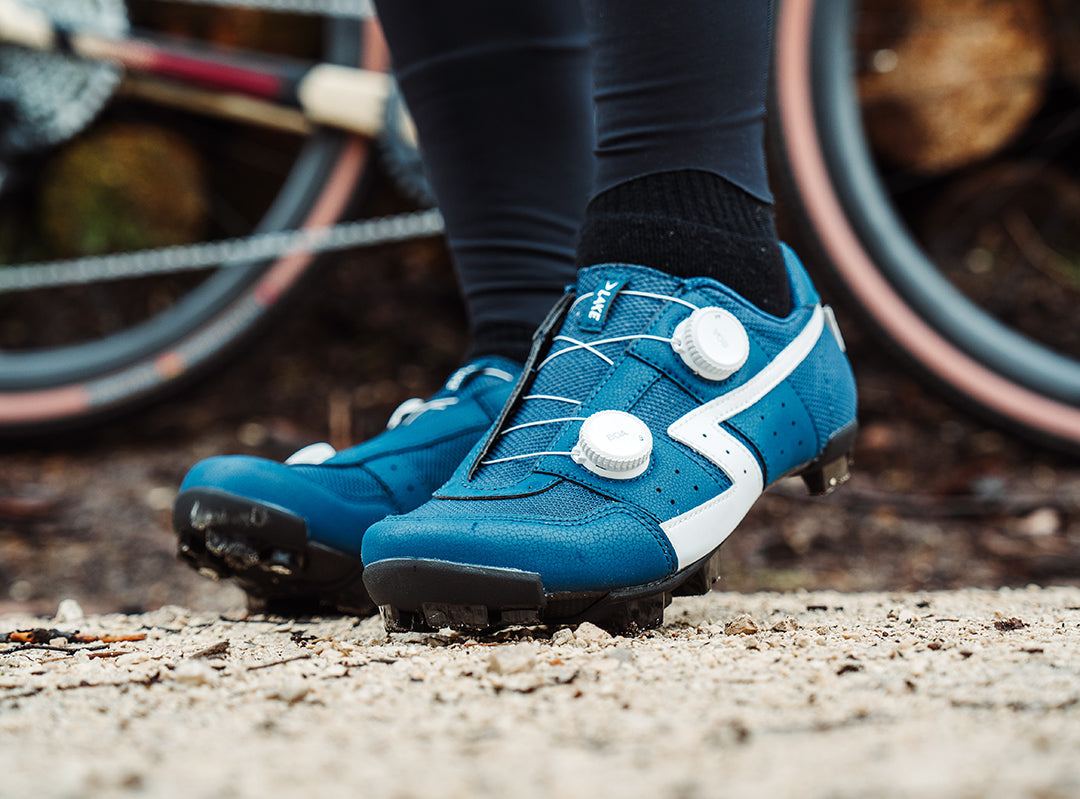
Gravelfahren verlangt deinen Schuhen etwas ab, das weder Rennrad- noch Trailfahren allein fordern: beides gleichzeitig. Dein Schuh muss ins Pedal einklicken und stundenlang effizient Kraft übertragen, dich dann aber auch über ein Bachbett, einen Weiderost oder eine halbe Meile unfahrbaren Weg tragen, ohne dass die Sohle Schaden nimmt oder du ausrutschst. Diese Kombination von Anforderungen liegt zwischen Rennrad- und MTB-Performance, und Schuhe, die nur für eine dieser Disziplinen gebaut sind, zwingen dich auf jeder Ausfahrt irgendwo zum Kompromiss.
Ein Rennradschuh bietet dir steife Kraftübertragung über Carbon und minimales Gewicht, aber seine glatte Sohle ist auf nassem Stein oder losem Schotter schlicht gefährlich, und das Gehen darin ist so langsam und unbequem, dass du deine Routenplanung danach ausrichtest. Ein MTB-Schuh bietet dir Gehkomfort und Grip, aber die üppige Gummiabdeckung, die ihn auf dem Trail so nützlich macht, bringt Gewicht mit und senkt die Treteffizienz auf langen Distanzen. Gravelschuhe liegen bewusst zwischen diesen beiden Punkten, nicht zufällig.
Dieser Guide erklärt, was Gravelfahren wirklich von einem Schuh verlangt, wie du die wichtigsten Merkmale einordnest und welche Lake Modelle dafür gebaut sind. Die komplette Gravel-Kollektion findest du online, wenn du das Sortiment direkt durchstöbern willst.
Was macht einen Gravelschuh anders?
Das prägende Merkmal eines Gravelschuhs ist die Hybridsohle. Wo eine Rennradsohle flach und steif ist und außer dem Cleat keinerlei Grip bietet, kombiniert eine Gravelsohle die Steifigkeit für effiziente Kraftübertragung mit genug Gummi an Ferse, Zehen und Kontaktzonen, um auf losem oder nassem Untergrund zu gehen, ohne auszurutschen. Diese Gummiabdeckung ist bewusst dosiert. Ein Gravelschuh braucht nicht das volle Profil eines MTB-Schuhs, denn du läufst keinen technischen Singletrail. Er braucht genug Abdeckung, um dich über die Untergründe zu bringen, auf denen du einen Fuß absetzen musst: loser Schotter, nasses Gras, matschige Feldwege, ein felsiges Bachufer oder ein Caféboden, ohne dass du dich blamierst. Mehr Gummi als das bringt Gewicht mit und dämpft das Pedalgefühl ohne praktischen Nutzen.
Auch das Obermaterial funktioniert anders. Zu Gravelbedingungen gehören Staub, Matsch, Wasserdurchfahrten und lange Stunden im Sattel, und das in allen vier Jahreszeiten. Das verlangt Langlebigkeit. Abriebfestigkeit zählt auf Gravel mehr als auf dem Rennrad, weil deine Füße näher am Boden sind und das Terrain weniger verzeiht. Eine integrierte Zungenkonstruktion verhindert, dass Schmutz und Feuchtigkeit auf langen Ausfahrten in den Schuh wandern. Atmungsaktivität zählt auf warmen Sommertouren. Wassermanagement, also wie schnell der Schuh entwässert und trocknet, wird relevant, wenn du in nassen Klimazonen fährst oder Bäche durchquerst.
Verschlusssysteme an Gravelschuhen müssen außerdem Anpassungen über lange Zeiträume mitmachen. Deine Füße schwellen auf einer fünfstündigen Gravelrunde in einer Weise an, die du auf einer 90-minütigen Trainingsrunde nicht erlebst. Mit einem BOA Li2 Drehverschluss machst du Mikroanpassungen aus dem Sattel heraus, ohne anzuhalten, und ein Setup mit zwei Drehverschlüssen gibt dir unabhängige Kontrolle über die Passform an Vorfuß und Mittelfuß, was dann zählt, wenn ein Teil deines Fußes mehr Raum braucht als der andere.
Die wichtigsten Merkmale im Überblick
SPD-Kompatibilität
Gravelschuhe nutzen ein 2-Loch-Cleatsystem, allgemein bekannt als SPD-kompatibel. Das ist der Standard für Gravel- und MTB-Pedale und ein wichtiger Unterschied zum 3-Loch-Standard am Rennrad. Prüfe vor dem Kauf eines Gravelschuhs, ob er für 2-Loch-Cleats ausgelegt ist. Alle Lake Gravelschuhe in diesem Guide sind SPD-kompatibel.
Das 2-Loch-System erlaubt zudem, dass das Cleat tiefer in der Sohle versenkt wird, was mit erklärt, warum Gravel- und MTB-Schuhe gehfreundlich sind, wie es Rennradschuhe nicht sind. Das Cleat sitzt unter der Sohlenoberfläche, statt daraus hervorzustehen.
Gummiabdeckung der Laufsohle
Die Menge an Gummi auf einer Gravelsohle bestimmt, wie viel Grip und Schutz du abseits des Rads hast. Achte mindestens auf Abdeckung an Zehen, Ferse und den Kontaktzonen des Vorfußes. Mehr Abdeckung bedeutet mehr Grip und Haltbarkeit für Hike-a-Bike-Passagen. Weniger Abdeckung spart Gewicht und hält das Pedalgefühl direkter. Die richtige Balance hängt von deinem Fahrstil ab: Wer Rennen auf gemischten Untergründen fährt, will weniger Gummi; wer beim Bikepacking stundenlang durch grobes Terrain schiebt, will mehr.
Sohlensteifigkeit
Sohlen aus Carbon übertragen am meisten Kraft und passen zu performanceorientiertem Gravelfahren. Sie sind außerdem leichter als Alternativen aus Composite oder Nylon. Wenn du lange Distanzen fährst, reduziert die Effizienz einer steiferen Sohle die Ermüdung über die Zeit.
Haltbarkeit des Obermaterials und Wassermanagement
Clarino Microfiber ist das häufigste Obermaterial im Lake Gravelsortiment. Es widersteht Abrieb, behält unter Last seine Form und saugt kein Wasser auf, wie es manche synthetischen Textilien tun. Wo Mesheinsätze verwendet werden, erfüllen sie einen konkreten Zweck: schnelle Wasserableitung und schnelles Trocknen nach einer Wasserdurchfahrt. Wenn dein Fahren viel Regen oder Bachdurchquerungen mit sich bringt, lohnt sich ein Obermaterial mit Mesheinsätzen. Ist dein Fahren trockener und abriebintensiver, bietet Mikrofaser oder Leder die bessere Langzeithaltbarkeit.
Das Lake Gravelsortiment
Die folgenden Schuhe sind vom höchsten zum niedrigsten Preis sortiert. Alle fünf sind SPD-kompatibel. Für Passformberatung im gesamten Sortiment nutzt du das Find My Fit Tool oder den Größenguide.
MX239 Gravel
Der MX239 Gravel ist Lakes komplettester Gravelschuh. Gebaut auf dem Competition Last, der Leiste, die eine größere Zehenbox mit einer engeren Fersenschale kombiniert: So bekommst du den Vorfußraum für lange Ausfahrten, ohne die Kontrolle über den Rückfuß zu verlieren. Die Sohle besteht zu 100% aus Carbon mit Mountain Race X Echtgummi an den Kontaktzonen, eine leichtere und flexiblere Auslegung als die volle Gummiabdeckung der MTB-Version. Dieser Unterschied zählt: Der MX239 Gravel wurde gezielt fürs Gravelfahren entwickelt, nicht aus einem Trailschuh abgeleitet.
Der Verschluss ist ein doppelter BOA Li2 mit unabhängiger Anpassung von Vorfuß und Mittelfuß. Das Obermaterial gibt es in Clarino Microfiber oder Recycled Leather. Eine integrierte Zungenkonstruktion hält Schmutz auf langen Ausfahrten draußen, und eine glasfaserverstärkte Fersenkappe fixiert den Rückfuß sicher, ohne aufzutragen. Erhältlich in Regular und Wide. Dieser Schuh passt zu Fahrern, die Race-Qualität für lange Graveldistanzen, Audax-Events oder Radreisen wollen, bei denen jedes Gramm und jedes Watt zählt.
-
Sohle aus 100% Carbon mit Mountain Race X Echtgummi
-
Doppelter BOA Li2 Verschluss (unabhängige Anpassung von Vorfuß und Mittelfuß)
-
Competition Last: größere Zehenbox, engere Fersenschale
-
Obermaterial aus Clarino Microfiber oder Recycled Leather
-
Integrierte Zunge, glasfaserverstärkte Fersenkappe
-
Erhältlich in Regular und Wide
MX30G
Gebaut auf dem Race Last, der eine schmalere Zehenbox und eine engere Ferse hat als der Competition Last. Die richtige Wahl, wenn du einen Schuh mit Performance-Passform willst, der gezielt für Gravelrennen oder Events auf gemischten Untergründen gebaut ist, bei denen geringes Gewicht und hohe Kraftübertragung Priorität haben. Die Sohle besteht zu 100% aus Carbon mit robusten TPU-Stollen und einer Aufnahme für Spikes an der Zehe, nützlich, wenn dich deine Strecken auf weichen oder matschigen Boden führen, wo zusätzliche Traktion zählt.
Der Verschluss ist ein doppelter BOA Li2. Das Obermaterial gibt es in Clarino Microfiber oder atmungsaktivem Mesh. Die Meshversion eignet sich besonders für nasse Bedingungen: Sie leitet Wasser schnell ab und trocknet nach Wasserdurchfahrten zügig.
-
Sohle aus 100% Carbon mit TPU-Stollen und Spike-Aufnahme an der Zehe
-
Doppelter BOA Li2 Verschluss
-
Race Last: schmalere Zehenbox, engere Ferse
-
Obermaterial aus Clarino Microfiber oder atmungsaktivem Mesh (Mesh für schnelle Wasserableitung und Trocknung)
-
Erhältlich in Narrow, Regular und Wide
MX21G
Der MX21G bringt denselben Competition Last und dieselbe Sohle aus 100% Carbon zu einem etwas niedrigeren Preis, indem er statt BOA einen Schnürverschluss nutzt. Das ist weniger Kompromiss als Designentscheidung: Schnürsenkel sind langlebig, unterwegs reparierbar und geben dir eine gleichmäßige, konsistente Spannung über den Vorfuß, die auf langen Ausfahrten gut funktioniert.
Das Obermaterial ist Clarino Microfiber mit einem Gummi-Zehenschutz gegen Stöße und einem innenliegenden Fersenfutter mit Grip, das den Rückfuß auf grobem Terrain an Ort und Stelle hält.
-
Sohle aus 100% Carbon mit Mountain Race X Gummi
-
Schnürverschluss (langlebig, austauschbar, unterwegs reparierbar)
-
Competition Last: größere Zehenbox, engere Fersenschale
-
Obermaterial aus Clarino Microfiber mit Gummi-Zehenschutz
-
Innenliegendes Fersenfutter mit Grip
-
Erhältlich in Regular und Wide
MX20G
Der leichteste und rennorientierteste Schuh im Lake Gravelsortiment. Gebaut auf dem Race Last, kombiniert er eine Sohle aus 100% Carbon mit einer Gummi-Offroad-Laufsohle und TPU-Stollen für Grip. Das Obermaterial ist Clarino Microfiber mit atmungsaktiven Mesheinsätzen für Belüftung und schnelles Feuchtigkeitsmanagement. Der Verschluss sind Schnürsenkel.
-
Sohle aus 100% Carbon mit Gummi-Offroad-Laufsohle und TPU-Stollen
-
Schnürverschluss
-
Race Last: schmalere Zehenbox, engere Ferse
-
Obermaterial aus Clarino Microfiber und atmungsaktivem Mesh
-
Extrem leichte Konstruktion
-
Erhältlich in Narrow, Regular und Wide
LXSDL Sandal
Eine Sandale mit offener Zehe und offener Ferse, entwickelt für SPD-kompatible Pedale. Maximale Belüftung und volle Bewegungsfreiheit für Zehen und Ferse: eine überzeugende Option für Gravelfahren bei heißem Wetter, Bikepacking in warmen Klimazonen oder für Fahrer, deren Vorfuß stark anschwillt und die jeden geschlossenen Schuh nach langer Zeit im Sattel unbequem finden. Die Sohle ist eine Enduro-Konstruktion aus Gummi und EVA mit glasfaserverstärktem Nylon. Das Haltesystem nutzt eine Klettverbindung mit zwei Gurtbändern über dem Fuß. Gebaut auf dem Comfort Plus Last.
-
Enduro-Sohle aus Gummi und EVA mit glasfaserverstärktem Nylon
-
Klettverbindung mit zwei Gurtbändern
-
Design mit offener Zehe und offener Ferse
-
Comfort Plus Last: Lakes großzügigste Vorfußplattform
-
Nur in Regular erhältlich
Gravel- vs. MTB-Schuhe: Was ist der Unterschied?
|
Gravelschuh |
MTB-Schuh |
|
|
Primäres Terrain |
Gemischte Untergründe: Schotterwege, Feldwege, leichte Trails |
Technische Trails: Singletrail, Wurzeln, Matsch, steile Abfahrten |
|
Gummiabdeckung |
Gezielte Abdeckung an den Kontaktzonen (Ferse, Zehe, Vorfuß) |
Volles oder nahezu volles Gummiprofil über die gesamte Sohle |
|
Stollenprofil |
Moderat, passend für losen Schotter und nasse Straßenbeläge |
Aggressiv, ausgelegt auf Grip auf nassen Wurzeln und technischem Boden |
|
Gewicht |
Leichter, weniger Gummimaterial |
Schwerer durch volle Gummiabdeckung |
|
Pedalgefühl |
Direktere Kraftübertragung; weniger Material zwischen Fuß und Pedal |
Gedämpfteres Pedalgefühl durch die volle Gummischicht |
|
Gehkomfort |
Gut für Schotter, Feldwege und Caféstopps |
Exzellent für lange Hike-a-Bike-Passagen und technisches Terrain |
|
MX239 als Beispiel |
MX239 Gravel: Mountain Race X Gummi nur an den Kontaktzonen |
MX239 MTB: volles Gummiprofil über die gesamte Sohle |
Die MTB-Kollektion und die Gravel-Kollektion stehen beide online, wenn du die zwei Linien direkt vergleichen willst.
Graveloptionen in Wide Fit
Der MX239 Gravel, MX30G, MX21G und MX20G sind alle in Wide erhältlich. Mit diesen vier Modellen findest du auf jedem Preisniveau im Sortiment einen Gravelschuh in breiter Passform.
Lakes Wide-Versionen werden auf eigenen Leisten gebaut, statt aus dem Standard abgewandelt zu werden. Die Geometrie der Zehenbox, das Vorfußvolumen und die gesamte Schuhform sind anders, nicht nur an einer Stelle seitlich verbreitert. Genau dieser Unterschied macht einen breiten Schuh für einen wirklich breiten Fuß passend.
Der MX239 Gravel Wide wird auf dem Competition Last gebaut und bietet die volle BOA-Ausstattung und Carbon-Performance der Standardversion. Der MX30G Wide ist die rennorientierte Option, erhältlich in drei Breiten inklusive Wide.
Für einen kompletteren Überblick über Fahrradschuhe in breiter Passform behandelt der Guide für breite Füße das gesamte Sortiment für Rennrad, MTB, Gravel und Winter. Die Kollektion breiter Schuhe zeigt alle verfügbaren Modelle an einem Ort.
Häufig gestellte Fragen
Sind Gravelschuhe SPD-kompatibel?
Ja. Gravelschuhe nutzen ein 2-Loch-Cleatsystem und sind damit SPD-kompatibel. Das ist der Standard in den Kategorien Gravel und MTB. Das 2-Loch-Muster erlaubt, dass Cleats in der Sohle versenkt werden, und deshalb sind Gravelschuhe gehfreundlich, wo Rennradschuhe es nicht sind.
Kann ich MTB-Schuhe zum Gravelfahren nutzen?
Das kannst du, und viele Fahrer tun es, besonders wenn ihre Strecken längere Hike-a-Bike-Passagen oder technisches Terrain enthalten. Der Unterschied: MTB-Schuhe tragen mehr Gummi und Gewicht mit sich, was die Treteffizienz auf langen Gravelausfahrten senkt. Wenn Gravelfahren deine Hauptdisziplin ist, wird dir ein für Gravel gebauter Schuh über die Distanz bessere Dienste leisten.
Welche Sohlensteifigkeit brauche ich für Gravel?
Eine steifere Sohle überträgt mehr Kraft und reduziert die Ermüdung auf langen Ausfahrten. Fast alle Schuhe außer dem LXSDL nutzen Sohlen aus 100% Carbon. Bei Ausfahrten über drei Stunden wird der Effizienzunterschied einer Carbonsohle spürbar.
Funktionieren Gravelschuhe fürs Bikepacking?
Ja. Der Schnürverschluss des MX21G ist unterwegs reparierbar, ein praktischer Vorteil gegenüber BOA-Verschlüssen in abgelegenen Gegenden. Die LXSDL Sandal funktioniert gut beim Bikepacking in warmen Klimazonen. Der MX239 Gravel und der MX30G eignen sich für performanceorientiertes Bikepacking, bei dem Gewicht und Effizienz am wichtigsten sind.
Wie wähle ich zwischen dem MX239 Gravel und dem MX30G?
Der zentrale Unterschied ist die Leiste. Der MX239 Gravel nutzt den Competition Last (größere Zehenbox, engere Ferse) und passt zu Fahrern, die Vorfußraum für Komfort auf langen Distanzen brauchen. Der MX30G nutzt den Race Last (schmalere Zehenbox, engere Ferse) und passt zu Fahrern mit Rennrad-Hintergrund, die eine präzise Performance-Passform bevorzugen. Hast du durchschnittliche bis breitere Füße oder fährst du Distanzen über vier Stunden, starte mit dem MX239 Gravel. Hast du schmale bis durchschnittliche Füße und legst Wert auf eine enge Performance-Passform, starte mit dem MX30G.
Sind Lake Gravelschuhe in breiter Passform erhältlich?
Ja. Der MX239 Gravel, MX30G, MX21G und MX20G sind alle in Wide erhältlich. Den MX30G gibt es zusätzlich in Narrow. Lakes Wide-Versionen werden auf eigenen Leisten gebaut, statt aus dem Standard abgewandelt zu werden. Die Kollektion breiter Schuhe listet alle verfügbaren Modelle, und der Guide für breite Füße erklärt, wie du herausfindest, ob eine breite Passform die richtige für dich ist.
Cycling shoes for all cyclists
Die besten Winter Fahrradschuhe 2026: Experten-Guide