

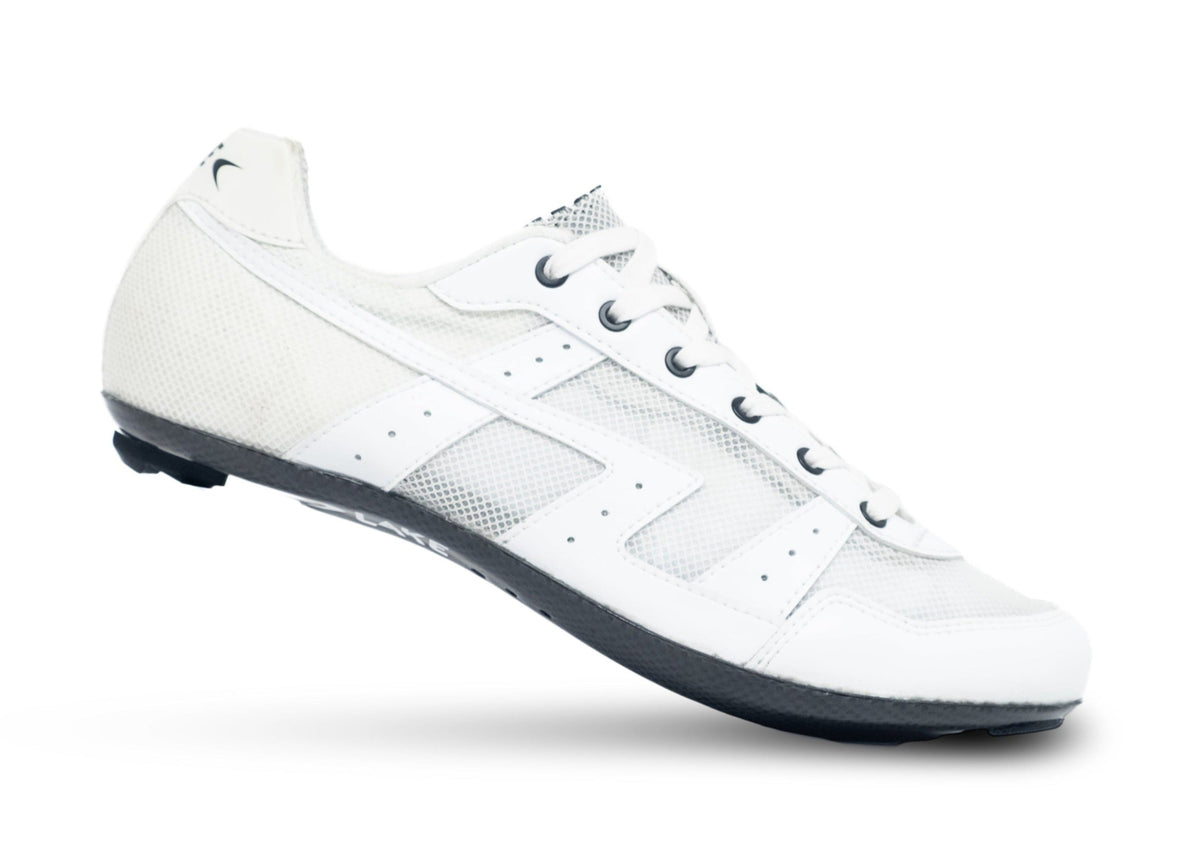
The best indoor cycling shoes match the pedals on your bike, breathe well and fit without pressure. On a smart trainer you clip into your own pedals, usually 3-bolt road pedals. Most spin and studio bikes take 2-bolt SPD cleats. Indoors there is no wind to cool you, so ventilation and the right width matter more than on the road.
Riding indoors is a different job for your feet. You stay in the saddle for long, steady efforts or hammer short intervals, there is no airflow, and sweat has nowhere to go. A shoe that feels perfect on a breezy summer ride can turn into a hot, tight box after forty minutes on the trainer.
We have made cycling shoes since 1982, and we see the same indoor questions every winter: which cleat do I need, why do my feet burn, and do I need a separate pair at all? This guide answers all three, then shows which of our models we would pick for a smart trainer and which for a spin bike or studio class.
Smart trainer, spin bike or indoor bike: start with the pedals
Before you look at shoes, look at the pedals you will be clipping into. The cleat on the shoe has to match them.
Smart trainer: your own bike, your own pedals
On a smart trainer you ride your own road, gravel or mountain bike, so your shoe needs the same cleat system as the pedals on that bike. Road bikes usually carry 3-bolt road pedals; gravel and mountain bikes usually carry 2-bolt SPD pedals.
Spin and studio bikes: usually 2-bolt SPD
Most spin bikes in gyms and studios have 2-bolt SPD pedals, often with a flat or toe cage on the other side so you can also ride in trainers. Some studio bikes use 3-bolt road pedals instead. Check with your gym or studio before you buy, or look at what the regulars ride: a small cleat with two bolts, recessed into the sole, is SPD; a large triangular cleat with three bolts is a road cleat.
Indoor bikes at home
Home indoor bikes vary, and many let you swap the pedals. Fit the system you already ride outside and one pair of shoes covers both.
3-bolt road or 2-bolt SPD: which is better indoors?
Both work well. A 3-bolt road cleat gives a larger contact area between shoe and pedal, which riders like for hard, seated efforts. A 2-bolt SPD cleat sits recessed in the sole, so you can walk normally from the changing room to the bike without slipping on a hard floor. If you want the full picture of cleats, soles and closures, our guide to choosing cycling shoes covers it step by step.
Why feet get hot and swell indoors
Outside, the wind you create cools you constantly. Indoors, even with a fan, your body runs hotter, you sweat more, and your feet swell and spread as the session goes on. That is why a shoe that fits well in the first ten minutes can start to press after an hour.
Riders often call the result "hot foot": a burning feeling or numbness under the ball of the foot. Pressure is usually the cause. A forefoot that is too narrow, a closure that is too tight, and a foot that has swelled in the heat all squeeze the nerves under your toes. Three things help most:
- A breathable upper. Mesh panels and light microfiber let heat and moisture escape instead of building up inside the shoe.
- The right width. A shoe that leaves your toes room to spread keeps pressure off the forefoot as your foot swells.
- A closure you can adjust. With a BOA dial you can release a little tension mid-session without stopping. With laces, set them slightly looser over the forefoot than you would for a cold outdoor ride.
Socks matter too. Wear a thin, breathable summer sock indoors, never the thick winter sock you use outside. And point a fan low, at your legs and feet, not only at your chest.
What to look for in an indoor cycling shoe
Ventilation first
Indoor riding is summer riding, all year. Choose a shoe with mesh or perforated panels and a light upper. A warm, sealed winter shoe is the wrong tool here: it is built to keep heat in, and on a trainer that is exactly what you do not want.
Stiffness that matches your sessions
On a trainer you spend most of the time seated and pedaling hard, so a stiff carbon sole transfers your effort efficiently and keeps pressure spread across the foot. A nylon composite sole is a little more forgiving and easier to walk in, and it is perfectly good for most indoor sessions. Our cycling shoe stiffness guide explains what the difference feels like.
A fit that stays comfortable for an hour or more
Indoors there are no descents to rest your feet and no traffic lights, so fit and width matter more than almost anywhere else. If you have wider feet, our guide to cycling shoes for wide feet shows which lasts and widths to start with.
Easy adjustment
BOA dials and laces both work indoors. A dial lets you fine-tune on the fly as your feet swell. Laces give even pressure over the whole foot, and indoors the usual downside is smaller: stopping for ten seconds to loosen them costs you nothing. Our BOA versus laces guide helps you choose.
Our shoes for the smart trainer (3-bolt road)
CX20R: breathable, light and made for indoor riding
The CX20R is the shoe we point most indoor riders to. Its very lightweight, breathable upper combines Clarino microfiber with mesh, it closes with laces, and it sits on our handmade CFC 3K carbon fiber sole. We built it to do it all, from hot days to indoor riding. It is built on our Race Last and comes in Narrow, Regular and Wide, plus women's specific sizes.
CX201: room to spread for wider or sensitive feet
The CX201 is built on our Comfort Plus Last, with a wider toe box and a generous forefoot platform that accommodates many foot shapes. Its construction is light and extremely breathable, which is exactly what a long trainer session asks for. It has a carbon composite sole, dual BOA Li2 dials and a Clarino microfiber upper, and it comes in Regular only: the Comfort Plus Last itself is already generous in the forefoot.
CX178: a broader toe box for everyday training
The CX178 is built on our Sport Comfort Last with a broader toe box that supports natural toe splay and reduces compression. A lightweight microfiber upper balances adjustability, breathability and durability, the nylon composite sole is comfortable for everyday training, and a single BOA L6 dial closes it. It comes in Regular and Wide.
CX302: light and stiff for hard intervals
If your indoor sessions are mostly racing and threshold work, the CX302 is our lightweight climbing shoe: a Clarino microfiber and mesh upper, dual BOA Li2 dials and our handmade CFC 3K carbon fiber sole, at 195 grams (size 44, without insole). It is built on our Race Last and comes in Narrow, Regular and Wide.
Triathletes can also train indoors in the TX224: a 3-bolt shoe with a breathable, fast-drying upper and three fit profiles, each on its own last.
Our shoes for spin bikes and studio classes (2-bolt SPD)
MX20G: light, breathable and easy to walk in
The MX20G has an extremely lightweight, breathable upper of Clarino microfiber with micro mesh paneling and laces. Underneath is a carbon sole with rubber and TPU lugs, so you get a stiff platform on the bike and grip on the walk to it. It is built on our Race Last and comes in Narrow, Regular and Wide.
MX30G mesh: for the hottest sessions
The MX30G comes in two versions: a hard-wearing all-microfiber upper and an ultra-lightweight mesh upper for hot and humid days. For indoor riding, choose the mesh version: it lets air move around the foot and helps the shoe dry. Dual BOA Li2 dials, a carbon sole with TPU lugs, our Race Last, and Narrow, Regular and Wide.
Quick picks
| You ride | Pedals | Our pick | Why |
|---|---|---|---|
| Smart trainer, hot sessions | 3-bolt road | CX20R | Breathable mesh upper, carbon sole, three widths |
| Smart trainer, wide or sensitive feet | 3-bolt road | CX201 | Comfort Plus Last, extremely breathable |
| Smart trainer, everyday training | 3-bolt road | CX178 | Broader toe box, nylon composite sole, Regular and Wide |
| Smart trainer, racing and intervals | 3-bolt road | CX302 | Light, carbon sole, mesh panels |
| Spin bike or studio class | 2-bolt SPD | MX20G | Breathable, walkable, three widths |
| Spin bike, very hot rooms | 2-bolt SPD | MX30G mesh | Ultra-lightweight mesh upper |
Why a dedicated indoor pair makes sense in winter
Using the same shoes indoors and out works, but a separate indoor pair pays off once you train inside a few times a week.
- Your winter shoes are too warm. The shoes that keep you comfortable on a cold road ride trap heat on the trainer. An indoor pair can be as open and light as a summer shoe.
- Sweat needs time to dry. After an indoor session the inside of your shoe is damp. A second pair lets each one dry fully before the next ride.
- The bike stays ready. Leave the indoor pair next to the trainer, cleats fitted, and you are riding within a minute.
- Studio and road in one wardrobe. If your bike has road pedals and the gym has SPD, a walkable SPD pair for classes saves you from clacking across the floor on road cleats.
One tip: copy your cleat position exactly from your outdoor shoes. Measure where the cleat sits on the old pair and set the new one the same, so your knees and hips do not notice the switch.
Sizing indoor cycling shoes
Start from your usual Lake size and our size guide. Measure your feet in the afternoon, when they are slightly larger, because that is closer to how they feel at the end of a hot session. Do not size up for swelling: a longer shoe lets your heel lift and moves the cleat out of position. Solve swelling with the right width, a breathable upper and a closure you can loosen. The size-up advice you may know from winter boots is for thick winter socks and does not apply indoors.
If your heel is hard to hold in place, a heat-moldable heel counter helps; our guide to heat-moldable cycling shoes explains which models have one.
FAQ
Do I need special shoes for indoor cycling?
You need cycling shoes with the cleat that matches the pedals on your bike, but they do not have to be indoor-specific. Any well-fitting road or SPD shoe works. A breathable upper and the right width make a clear difference, though, because indoors there is no wind to cool your feet.
Can I use road cycling shoes on a spin bike?
Yes, if the spin bike has 3-bolt road pedals. Most gym and studio spin bikes use 2-bolt SPD pedals, and a road shoe with a 3-bolt cleat will not clip into those. Check the pedals first. If you ride both, a walkable SPD shoe for classes is the easier choice.
What cleats do spin bikes use?
Most spin bikes in gyms and studios use 2-bolt SPD pedals, often combined with a flat or toe-cage side for regular trainers. Some use 3-bolt road pedals. Home indoor bikes vary, and many let you fit your own pedals. Ask your gym or look at the pedal before buying shoes.
Should indoor cycling shoes be a size bigger?
No. Your feet do swell indoors, but a longer shoe lets your heel lift and puts the cleat in the wrong place. Choose your usual Lake size, then deal with swelling through the right width, a breathable upper and a closure you can loosen during the session.
Why do my feet go numb or burn on the indoor trainer?
Usually pressure. Heat makes your feet swell, and a forefoot that is too narrow or a closure that is too tight then presses on the nerves under the ball of the foot. Try a wider shoe or last, loosen the closure a little, wear thin socks and point a fan at your feet.
Can I use mountain bike shoes on a smart trainer?
Yes, as long as the bike on the trainer has 2-bolt SPD pedals. On a smart trainer you ride your own bike and its pedals, so the shoe simply has to match them. Some riders fit SPD pedals to their road bike for the winter so one walkable shoe covers trainer and studio.
Find your indoor pair
Indoor training is where fit problems show up fastest, so it is the best place to get the fit right. Not sure which last or width suits your feet? Our Find My Fit tool matches your foot to the right Lake shoe, and the size guide tells you which size to order.
Rennradschuhe für breite Füße: der Ratgeber
Women's Cycling Shoes: What Is Different and How to Choose